

When it comes to organizing gatherings, one component often reigns supreme: food. Yet, despite being one of the highest line items in any budget, this area is frequently overlooked when it comes to caring for everyone at the table. That’s where Tracy Stuckrath comes in. Tracy is a true advocate for accommodating dietary restrictions, promoting well-being, and making every attendee feel valued.
On a recent episode of The Event Pro Show, host Seth Macchi welcomed Tracy, founder and president of Thrive Meetings & Events, and host of the Eating at a Meeting podcast. With over 30 years of experience, 300+ podcast episodes, co-author status, and certifications ranging from health coaching to food safety, Tracy’s expertise is matched by her passion. The conversation between Seth and Tracy offers powerful real-life stories, strategies, and a compelling call to action for anyone involved in planning corporate gatherings.
Tracy’s journey didn’t start with a career plan, it began as a necessity. Personal food allergies meant she experienced exclusion firsthand, both as an attendee and an organizer. One story that stuck with her: a corporate boss telling her to “just eat the damn cake” despite her clear allergies. Moments like this influenced Tracy’s drive to ensure no one is left hungry or uncomfortable during a meal.
Her own background as someone who moved around frequently growing up made her skilled at connecting with new people. Tracy points out that eating together is foundational for building relationships.
As Tracy highlights on the show, food is about so much more than sustenance. It’s a vehicle for connection, community, and even business growth. Meals bring people together, opens doors for conversation, and sets the tone for the overall experience.
However, Tracy challenges planners to see food as more than a commodity or convenience. In her discussion with Seth, she underscores that providing safe, inclusive options isn’t an exception, it should be the rule. “It’s not like some big exception. This is just, if we’re going to serve humans, let’s serve humans. And the people that do it the best not only are just doing the right thing, but it actually can be a competitive advantage.”
When people are excluded because of an inability to eat what’s provided, they’re left on the sidelines, hangry or forced to leave the gathering to find sustenance elsewhere. Not only does this erode goodwill, but it also means the organizer loses out on the full benefit of participants’ presence and engagement.
Tracy points to research and her own conversations which demonstrate a clear bottom-line impact. Statistics show that when individuals with dietary restrictions feel safe and seen, they return and spend more. She shares a data point from Certistar: guests with allergies often spend 38% less when options are lacking. Conversely, 91% say they’ll return if they’re greeted with care.
This benefit extends to the group context. If a colleague, family member, or key attendee has a dietary need and knows their group will be treated well, they become loyal guests.
Real-world examples from Tracy’s experience illustrate just how significant this can be. One hotel chef she worked with accommodated a business traveler with allergies so well that he brought his entire family back for a lengthy vacation. Another venue lost out on the meal business of two vegan attendees during a three-day stay because there were no vegan options. Every time someone has to leave the room for food, the organizer loses engagement, connection, and potentially future business.
Misguided attempts at inclusive eating can sometimes do more harm than good. Tracy tells a memorable story of two chafing dishes at a breakfast buffet, one labeled gluten-free and the other not, but both wrapped identically in foil. Not only was the gluten-free item improperly labeled, but the signs had been switched. The attendees, and even the staff, couldn’t tell which was truly safe. In another case, brownies labeled “nut-free” clearly contained nuts.
Problems like these often occur due to a breakdown in communication between the kitchen (back of house) and the serving staff (front of house). Chefs say, “I’m not responsible for the labels,” while servers say, “I don’t cook, so how would I know?” Tracy emphasizes: “That relationship really needs to be very symbiotic… because [servers] are the ones talking to attendees.” The message is clear: everyone, from chef to server to organizer, must be part of the solution.
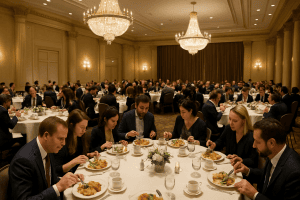
If you’re just starting to think seriously about food inclusivity, Tracy suggests these priorities:
- Site Visits: Ask venues how their front- and back-of-house teams coordinate on food safety. Don’t just trust a checklist; talk to staff and probe for real processes.
- Finalizing Menus: Request a full breakdown of allergens and dietary restrictions for every planned dish, not just the “special” options.
- Data Collection: Give venues adequate advance notice, aim for at least a month, so they can order ingredients and plan accordingly. Gather and share dietary needs data from participants early, using historical data if it’s your first time taking these steps.
She notes that while evacuation routes and backup plans for weather are standard, food safety rarely makes the checklist. That needs to change.
The conversation shifts smoothly to why inclusive practice can become a distinguishing feature. Not only does it prevent risk and negative press, but it means attendees and their families are likely to return again and again. This is reinforced by heartwarming stories, like an attendee at a major conference who traveled 20 hours from India, was able to eat familiar, loved dishes because a chef collaborated with an intern from the same region, and left with glowing appreciation for the effort.
When asked about the future, Tracy envisions more personalized and technologically empowered experiences. She predicts that systems will get better at collecting dietary needs, and communicating them to chefs in real time, ensuring everyone has a seat and a plate at the table.
She’s also hopeful that DEI work, which some seek to minimize, will remain at the core of professional practice. After all, inclusivity isn’t about special treatment, it’s about meeting the needs of real people.
Tracy Stuckrath’s advocacy and expertise offers a roadmap for anyone looking to create more welcoming, successful gatherings. It’s about treating people like people and serving them in ways that allow everyone to thrive together.
If you want to learn more, check out Tracy’s podcast, Eating at a Meeting, and connect with her at Thrive Meetings & Events. As you organize your next gathering, remember: the meal is never “just” the meal. It might just be the thing your guests remember most and what brings them back for years to come.
To listen to the full conversation on The Event Pro Show and other guests, tune in here: